 Recently I experienced the most-dreaded of working mother maladies – the child care provider’s vacation. In order to cobble together coverage for the week, I had to bring my nine-year old daughter, Cameron, to a not-for-profit Board meeting with me one evening.
During the meeting, I thought Cameron was deeply engrossed in her online math homework. However, after the meeting, before we even got to the car, she had me deep in a discussion about whether only people as rich as Bill Gates could donate money to make lives better (in addition to telling her that many people practice philanthropy, I felt compelled to remind her Melinda was just as rich as Bill!) and how she could help other children in her community.
While my husband and I do involve Cameron in our personal philanthropy, I realized then that she may be ready to participate on a deeper level. It turned out that my child care provider’s vacation was a gift to our family, because it offered another opportunity to discuss philanthropy and family values with my young daughter.
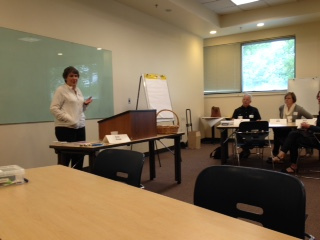
Last week Anne Knapp, the Director of Philanthropic Initiatives at Woodland Park Zoo(opens in new tab), offered the same opportunity to WWF members. Anne led a two-hour workshop for women interested in grounding their philanthropy in their personal values. Anne also gave us tools for broadening the conversation about values and philanthropy to include members of our families.
Anne’s workshop was based upon the research and writing of Dennis Jaffe, PhD (www.dennisjaffe.com(opens in new tab)). According to Dr. Jaffe, values are important because:
- Values are the internal guides to our behavior.
- Values are somewhat consistent but can change over time, as we grow and mature.
- By reviewing out past and current values we can identify what values we want to guide our future actions.
- Values are aspirational. People are never perfect. Values wouldn’t be important if they were easy to live by.
As I reflected on my personal values during the workshop, I was struck by how those values don’t always translate into my philanthropy. For example, I value life-long learning and education, which is why I enjoy learning new things and impress the importance of education upon my daughter. Interestingly, however, I donate more frequently to human services organizations than educational organizations.
What are your values? How do your values guide your philanthropic choices (or not)? How do your values show up in the work that we do collectively at Washington Women’s Foundation? How would you like for them to show up?

Selections from Anne Knapp’s Recommended Reading List
Cochell, Perry and Rod Zeeb. Beating the Midas Curse(opens in new tab)
Gallo, Eileen, Jon J. Gallo, and Kevin J. Gallo. Silver Spoon Kids: How Successful Parents Raise Responsible Children(opens in new tab)
Gates, William H. and Mary Ann Mackin. Showing Up for Life: Thoughts on the Gifts of a Lifetime(opens in new tab)
Gottman, John, Ph.D. and Joan Declaire. Raising An Emotionally Intelligent Child: The Heart of Parenting(opens in new tab)
Grubman, James, Ph. D. Strangers in Paradise: How Families Adapt to Wealth Across Generations(opens in new tab)
Jaffe, Dennis, Ph.D. Stewardship In Your Family Enterprise: Developing Responsible Family Leadership Across Generations(opens in new tab)
Twist, Lynne. The Soul of Money: Reclaiming the Wealth of Our Inner Resources(opens in new tab)
Through our groundbreaking model of women-powered, collective philanthropy, Washington Women’s Foundation has given out $15 million in transformational grants that enable not-for-profit organizations to improve lives, protect the environment, advance health and education and increase access to the arts throughout Washington state.
We invite all women to join us to make a more powerful impact in our community. The challenges ahead of us are never as great as the power behind us. www.wawomensfdn.org (opens in new tab)